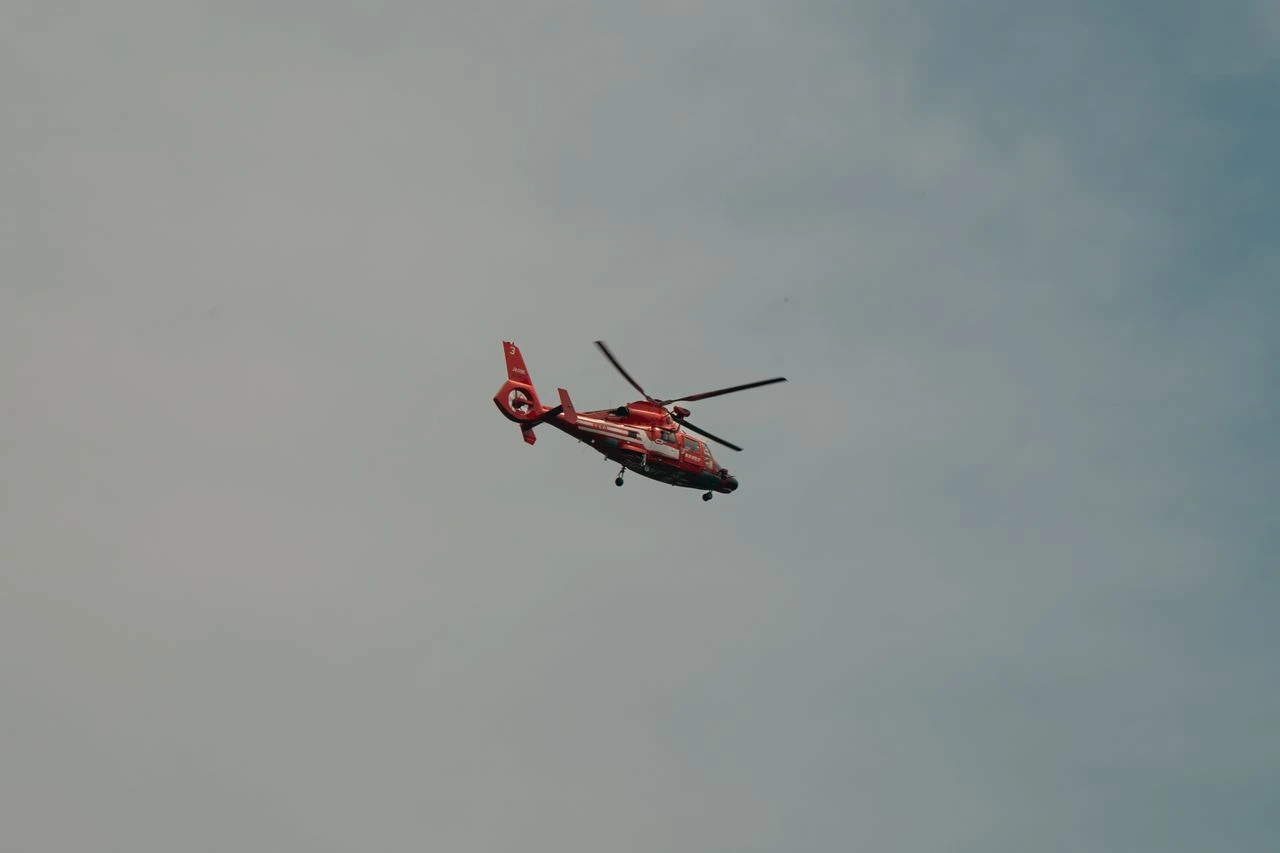
How Can a Patient Travel from Dubai to the UK with Medical Support?
A patient in Dubai can return to the UK by dedicated air ambulance, on a stretcher on a scheduled flight, or in a seat with a nurse or doctor. The treating doctor and the airline or air ambulance team decide which is safe. Scheduled flights need medical clearance: Emirates asks for its MEDIF at least 48 hours before the flight, and British Airways asks for medical forms at least 7 days before departure. The UK government is clear that a UK GHIC does not work in the UAE, and the British Embassy cannot arrange or pay for medical repatriation. So travel insurance, the employer or the family usually pays. Free NHS hospital care in the UK depends on being ordinarily resident there, not on nationality.
Your husband had a stroke on a business trip. Your mother fell while visiting the grandchildren in Dubai. Or a colleague is recovering in a UAE hospital and wants to be treated near home in Leeds or Glasgow. The Emirates flight to Heathrow takes about seven and a half hours. For a patient who is unwell, those hours need careful planning. The plan covers a hospital bed at the other end, an ambulance at the airport and someone who knows the case.
Global Nest Worldwide coordinates these journeys from the UAE, 24/7. Licensed air ambulance operators, airlines and medical escorts carry and care for the patient. We bring the pieces together and keep the family informed.
If you need to bring someone who has died back to Britain rather than arrange a medical transfer for a living patient, see our human remains repatriation from Dubai to the UK guide.
When is an air ambulance from Dubai to the UK appropriate?
This is a clinical decision. It belongs to the doctor treating the patient in Dubai and to the medical team of the airline or air ambulance operator. It is not a decision for the family or for us.
As a guide, a dedicated air ambulance is usually discussed when the patient:
- Is critically ill, ventilated or needs intensive care monitoring
- Needs equipment or oxygen beyond what a passenger aircraft allows
- May deteriorate during a long flight with no quick way to land and treat them
- Is not accepted by the airline’s medical department for a scheduled flight
The UK Civil Aviation Authority notes that cabin crew are trained in advanced first aid but not to give medication, and cannot give nursing care. Airlines have their own medical advisers who “clear” passengers, and the airline makes the final decision. For a patient who needs more than a seat, a medical escort or an air ambulance fills that gap.
Private air ambulance or commercial flight with a medical escort?
The cheapest option is not always the safe one. These are the three usual routes:
Option | Who it usually suits | Relative cost |
Dedicated air ambulance | Unstable, ventilated or intensive-care patients; patients an airline will not accept | Highest |
Stretcher on a scheduled flight | Stable patients who must lie flat, travelling with a medical escort | Middle |
Seat with a medical escort | Stable patients who can sit upright but need a nurse or doctor with them | Lowest of the medical options |
A stretcher on a scheduled flight needs the airline’s medical approval and depends on availability on the route. British Airways’ medical form asks, for stretcher cases, for the name of the ambulance company that will meet the passenger at the destination. So the UK ambulance must be booked before the flight is confirmed. For the escort side, see medical escort services and a stretcher on a commercial flight.
Airline medical clearance: Emirates and British Airways
Both main airlines on the Dubai–London route ask for medical information in advance.
Emirates asks for a Medical Information Form (MEDIF) when a passenger’s condition may need oxygen, a stretcher, a medical escort or other medical arrangements. Part 1 is completed by or for the passenger, part 2 by the treating physician. The form must be submitted within a month before travel and no later than 48 hours before the flight. Emirates may ask for more information before it approves.
British Airways sends medical cases to its Passenger Medical Clearance Unit (PMCU). The PMCU advises whether a passenger is fit to fly. BA asks for medical forms at least 7 days before departure.
That difference matters. If the patient wants to fly British Airways, the paperwork has to start a week ahead. Each airline on a connecting journey may need its own approval too. The UK government’s guidance also says that on a scheduled flight home you may need advance confirmation from your treating doctors that you are fit to fly.
Who pays? GHIC, travel insurance and the embassy
Many families assume the NHS or a GHIC card will help. In the UAE, they will not:
- GHIC and EHIC do not cover the UAE. The NHS Business Services Authority lists where a UK GHIC can be used: EU countries, Iceland, Liechtenstein, Norway, Switzerland in some cases, Montenegro, Australia, the Crown Dependencies and some UK overseas territories. The UAE is not on the list.
- The British Embassy cannot pay. The Foreign, Commonwealth & Development Office (FCDO) says the embassy or consulate cannot arrange medical repatriation or pay for it, and cannot pay medical bills.
- Insurance should arrange it. The FCDO says your insurance company should arrange medical repatriation or evacuation. If it does not cover this, you have to arrange and pay for it yourself.
- Medical bills in the UAE. The FCDO warns that you may be prevented from leaving the UAE if you cannot pay your medical bill.
If you have UK travel insurance, call the insurer’s 24/7 emergency line first. Many insurers use their own assistance company. They decide whether to fly the patient home, and how. Keep every receipt and medical report. If the patient lives and works in the UAE, check their UAE health insurance and any employer cover as well.
What does a Dubai-to-UK medical flight cost?
There is no fixed price. The main factors are:
Cost factor | Why it changes the price |
Aircraft or flight type | A dedicated jet costs far more than a stretcher or escorted seat on a scheduled flight |
Destination airport | London is the usual route; a regional airport may need a different aircraft or routing |
Medical crew | A nurse, a paramedic, a doctor or a full intensive-care team |
Equipment and oxygen | Ventilator, infusion pumps, oxygen for the whole flight |
Ground ambulances | Bedside in Dubai to the aircraft, and the UK airport to the receiving hospital |
Timing | A flight within hours costs more than one planned a few days ahead |
Companion | Whether a relative can travel with the patient |
Ask for an itemised written quote that says what is included from bed to bed. For a broader guide, see air ambulance assistance.
How the medical repatriation process works
- Share the case. Tell us where the patient is, their condition, their insurer if any, and where in the UK they need to go.
- Medical review. The treating doctor in Dubai prepares a recent medical report. The airline or air ambulance team reviews it and decides how the patient can travel.
- Receiving care in the UK. A hospital, care team or family home must be ready to receive the patient. Where a hospital admission is needed, the receiving team agrees to accept the patient before the flight is booked.
- Clearances and booking. MEDIF or BA medical forms are submitted, the stretcher or seats are booked, or the air ambulance is scheduled. Insurer pre-authorisation is confirmed where relevant.
- Flight and ground transfer. A ground ambulance takes the patient from the UAE hospital to the aircraft. The escort or air ambulance crew stays with them throughout.
- Handover. On landing, a UK ambulance takes the patient onward. The escort hands over in person to the receiving clinician, with the discharge summary, medication list and flight notes.
Arrival in the UK: London, Manchester and beyond
Emirates gives the Dubai–Heathrow flight time as about 7 hours 25 to 7 hours 50 minutes, depending on direction, flight and season. Emirates flies 42 times a week on that route alone, which helps when an airline stretcher or escorted seat must be matched to a date. Manchester, Gatwick and other UK airports are also possible. The right airport depends on where the receiving hospital is and what the airline or operator can offer on the day. A patient going to Scotland or the North of England may be better served by a regional airport than a long road transfer from London. We confirm the routing for each case.
NHS care after arrival
Free NHS hospital treatment in England is for people who are “ordinarily resident” in the UK. That means living in the UK lawfully and on a properly settled basis, and the hospital may ask for proof. The FCDO adds that someone who has never lived in the UK, or has been abroad for some time, may not automatically be entitled to free NHS hospital care.
This matters for British expats who have lived in Dubai for years. Before the flight, check how the receiving hospital will treat the patient’s residence status. If needed, arrange private admission or insurance cover in advance.
Medical reports, insurance and travel documents
- A recent medical report or discharge summary in English, with test results
- Treating doctor’s name and contact details in Dubai
- Airline medical clearance (Emirates MEDIF or BA PMCU forms) or the operator’s acceptance
- Passport for the patient and for any travelling relative
- Name and contact details of the receiving hospital or doctor in the UK
- UK ambulance booked to meet the flight (named company, for stretcher cases)
- Insurance policy number and the insurer’s written approval, where relevant
- Medication list, and enough medication for the journey
- The UAE hospital bill settled or guaranteed
How the British Embassy can still help
The embassy cannot pay, but it can help in other ways. With consent, it can tell family in the UK that someone is in hospital, help doctors abroad contact UK medical staff or the insurer, and share details of English-speaking interpreters. British nationals in Dubai and Abu Dhabi needing urgent consular help can call +971 4 309 4444. From the UK, the FCDO is on +44 (0)20 7008 5000, 24/7.
Why families and hospitals use a dedicated coordinator
A medical return to the UK involves the UAE hospital, the airline’s medical desk, the insurer, two ambulance services and a UK hospital, often across a three- or four-hour time difference. Families tell us the hardest part is chasing all of them while worrying about the patient. We give you one contact for all of it. We follow up with each party and update you in plain language until the handover is complete. For help while the patient is still in hospital, see hospital assistance in Dubai.
In a medical emergency in the UAE, call 998 for an ambulance first.
Frequently asked questions
Can a patient fly from Dubai to the UK while receiving medical support?
Yes, if the treating doctor and the airline or air ambulance team agree. Options range from a seat with a nurse to a stretcher on a scheduled flight to a dedicated air ambulance.
How much does a Dubai-to-UK air ambulance cost?
There is no fixed price. It depends on the aircraft, crew, equipment, destination, ground ambulances and urgency. Ask for an itemised written quote.
When is a private medical aircraft necessary?
Usually when the patient is unstable, ventilated, needs intensive monitoring, or an airline will not accept them. The medical team decides.
Can a nurse or doctor escort a patient on a scheduled flight?
Yes, with the airline's medical clearance. Emirates needs its MEDIF at least 48 hours ahead, and British Airways asks for forms at least 7 days ahead.
Does travel insurance cover medical repatriation to the UK?
Many policies do, and the FCDO says the insurer should arrange it. Check your policy and call the insurer's emergency line first. A UK GHIC does not cover the UAE.
Will the NHS treat the patient when they arrive?
Free NHS hospital care depends on being ordinarily resident in the UK. Long-term expats should check their entitlement before the flight.
Tell Us What Has Happened. We Will Guide You.
During a difficult moment, your family should not have to learn unfamiliar procedures while trying to grieve.
Global Nest Worldwide provides one point of coordination for funeral, burial, cremation and repatriation arrangements in Dubai and across the UAE.