How Does the Abu Dhabi Central Morgue Process Work?
The Abu Dhabi central morgue is the government mortuary run by SEHA, on the Bani Yas side of the city, where many people who die in Abu Dhabi are taken. Families do not usually need to go there first. The hospital or police tell you where your loved one is. The death certificate is issued through the Department of Health (DoH) and TAMM, police clearance is added when needed, and DoH’s Sanadkom team contacts residents’ families to help with burial, cremation or repatriation.
If you are reading this, you have probably just had a phone call no one wants. Someone you love has died in Abu Dhabi, and you have been told they are “at the morgue”. This guide explains what that means, what happens next and what you need to do yourself. Much of it is less complicated than it first sounds.
Where is the Abu Dhabi central morgue?
SEHA, Abu Dhabi’s government health services company, runs the emirate’s mortuaries. The main city facility is often called the Central Mortuary – Bani Yas (you will also see it listed as the Abu Dhabi central morgue, and people search for it as the Baniyas mortuary). Map listings place it in the Madinat Al Riyad and Bani Yas area, off the Abu Dhabi to Al Ain road side of the city.
It is not the only mortuary. Sheikh Khalifa Medical City (SKMC) has its own, and Al Ain has a central mortuary that SEHA opened in 2020. SEHA has said its central mortuaries work around the clock, including on public holidays.
We are not listing a phone number or opening hours here, because we could not confirm them on an official SEHA or DoH page. The hospital or police officer handling the case can give you the right contact, and so can we.
How families find out where the body is
Where your loved one is taken depends on how they died.
Situation | What usually happens |
Died in a hospital | The hospital completes the death report and your loved one is kept in its mortuary or moved to a government mortuary |
Died at home or in public | Someone calls 999. The police write an initial report and move the body to a government mortuary |
Unexpected or unclear cause | The police and forensic doctors are involved. The body stays at the mortuary until the police and prosecution allow release |
Died in Al Ain or Al Dhafra | Usually a mortuary in that region, not the city central morgue |
So the first step is simple: ask the hospital or the police station handling the case which mortuary your loved one is in, and which case or reference number they are using. Write it down. You will be asked for it again.
Releasing your loved one: the process in Abu Dhabi
The UAE’s official portal, u.ae, describes the core steps. Abu Dhabi has added a digital layer on top through DoH and TAMM.
- The death report. A doctor at the hospital or mortuary records the death and its cause.
- Police clearance, where needed. For deaths outside hospital or with an unclear cause, the police issue a no objection certificate. Separate NOCs may be needed to release the body, to embalm it and to send it abroad.
- The death certificate. In Abu Dhabi this is issued through DoH, and families can request and manage it on TAMM with UAE Pass.
- Attestation, if the certificate is going abroad. Since 15 September 2026, DoH and the Ministry of Foreign Affairs let you have a death certificate issued and digitally attested on TAMM in one step. This applies to Abu Dhabi certificates only. Certificates from Dubai or the northern emirates still follow their own route.
- The embassy or consulate. For a foreign national, the embassy registers the death and issues the papers it requires, such as a no objection letter, and cancels the passport.
- With the papers in place, the mortuary releases your loved one to the family’s chosen route: burial, cremation or repatriation.
For a natural death in hospital this can move quickly. When police or prosecutors are involved, the timing depends on them, and nobody can promise a date in advance.
Sanadkom: help for residents' families
Sanadkom is a DoH initiative. Since December 2024 it covers all residents of Abu Dhabi, not only citizens.
According to DoH, after a death notice is issued the Sanadkom team contacts the family, sends a text message explaining the service, and helps with death-related procedures: the certificate, burial arrangements and preparing the deceased for travel. With the family’s consent, the doctor in charge can complete the death report and obtain permits on the family’s behalf at the healthcare facility where the death happened.
The Authority of Social Contribution, Ma’an, pays the fees. DoH lists the death certificate, ambulance transport, embalming and repatriation as covered for residents.
- ☐ Keep your phone on and answer unknown Abu Dhabi numbers for a day or two
- ☐ Have the deceased’s Emirates ID and passport ready
- ☐ Know who in the family is making decisions, and whether the wish is burial, cremation or repatriation
- ☐ Ask Sanadkom what it will cover in your case before paying anyone for the same thing
Sanadkom covers a lot. Families usually still need help with the parts it does not handle: the embassy, the airline and the arrangements waiting at the other end.
Next steps after the Abu Dhabi central morgue
Burial in the UAE
Muslims are buried in municipal Muslim cemeteries, usually very soon after release. For non-Muslims, Abu Dhabi has a Christian cemetery in Bani Yas, used by the Catholic and Anglican churches, and Al Ain has a multi-faith cemetery. Burial generally needs the deceased to have held a UAE residence visa. Check eligibility with us or the cemetery before you plan a date.
Cremation
Abu Dhabi families have two options:
- Al Ain: the Al Foah crematorium and cemetery, built by Al Ain Municipality for non-Muslims of all faiths.
- Dubai: the New Sonapur Hindu Cremation Ground in Jebel Ali, which cremates people of every non-Muslim faith. Moving your loved one from Abu Dhabi to Dubai needs police permission from the emirate where the death happened. Our guide on how cremation works in Dubai covers the documents.
Repatriation
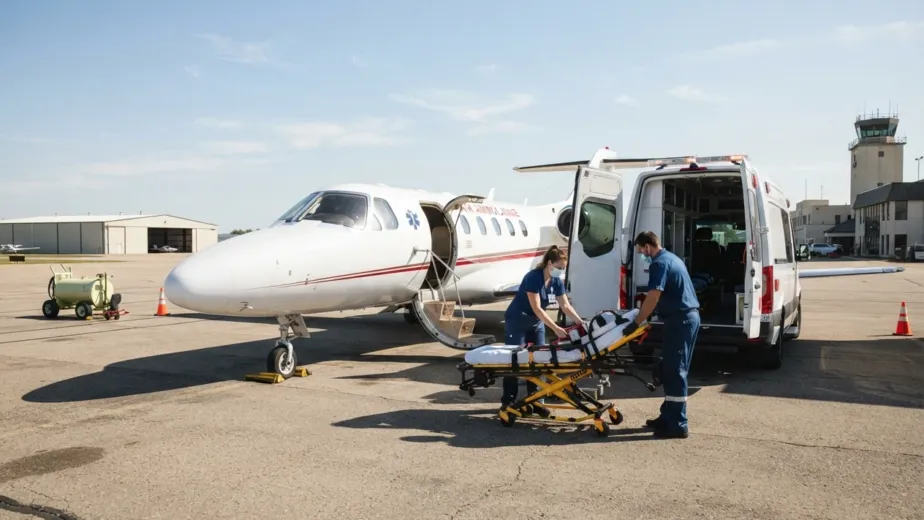
Many families in Abu Dhabi want their loved one home. That means embalming, a sealed coffin, attested documents, the embassy’s papers and a cargo booking with an airline. For residents, Sanadkom may cover a large part of the cost. Our list of documents needed for repatriation explains what airlines and embassies ask for.
Where we fit in
We are a funeral and repatriation coordinator based in Dubai, and we also work on cases in Abu Dhabi. Your case coordinator can talk to the mortuary, the embassy and the airline, explain what Sanadkom is covering and what is left, and organise the burial, cremation or flight home. Our page on funeral coordination across the UAE sets out what we do.
If Sanadkom is already handling everything you need, that is good news, and we will tell you so.
Frequently asked questions
Can I visit my loved one at the Abu Dhabi central morgue?
Families can usually see their loved one before release, for identification or to say goodbye, but arrangements vary with the case, especially if the police are involved. Ask the mortuary or your coordinator first rather than turning up.
Do I need to go to the morgue to get the death certificate?
Usually not. In Abu Dhabi the certificate is issued through DoH and TAMM, and Sanadkom can help residents' families complete the steps.
How long does it take to release a body in Abu Dhabi?
For a natural death in hospital, often a short time once papers are complete. If the police or prosecution are involved, release waits for their decision.
Is the death certificate attested automatically?
Since 15 September 2026 you can have an Abu Dhabi death certificate issued and digitally attested by MOFA on TAMM in one step. You still need to choose that option.
Who pays if the person was not a resident?
Sanadkom's fee coverage is for residents. For visitors, the family, an insurer or sometimes an employer pays. We can explain the costs before anything is booked.
Tell Us What Has Happened. We Will Guide You.
During a difficult moment, your family should not have to learn unfamiliar procedures while trying to grieve.
Global Nest Worldwide provides one point of coordination for funeral, burial, cremation and repatriation arrangements in Dubai and across the UAE.