How Does a Repatriation Flight from the UAE Work?
repatriation flight from the UAE is a normal scheduled passenger or freighter flight that carries the coffin in its cargo hold, booked as HUM (human remains) cargo. Before the airline accepts it, the body is embalmed, sealed in a hermetic coffin and cleared by the UAE authorities and the embassy. A named funeral director must be ready to receive it at the destination airport. Families can fly on the same aircraft but do not have to.
Once the paperwork in the UAE is moving, the questions change. Families stop asking “what do we need?” and start asking “which flight, and who meets them when they land?” This guide is about that last stretch: the airline booking, the papers that travel with the coffin and the moment of handover at each end.
If you still need the death certificate, police clearance or embassy letter, read the full repatriation process first. The flight comes after all of that.
How a repatriation flight UAE booking works
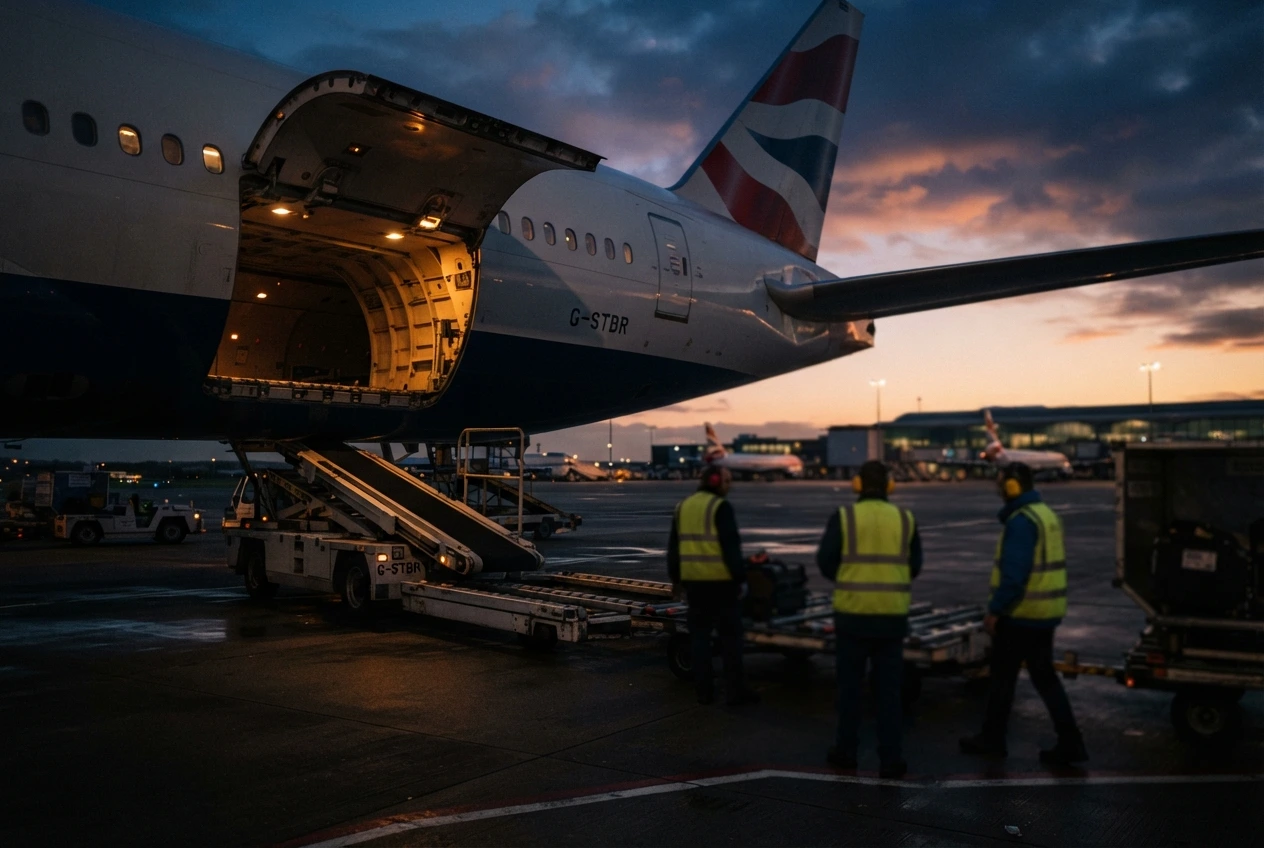
There is rarely a special aircraft. Your loved one travels in the hold of a regular flight, booked on an air waybill under the special handling code HUM. Airlines that follow the IATA Compassionate Transportation Manual handle HUM shipments separately from ordinary freight, out of public view and away from food and live animals. Emirates SkyCargo runs this service under the name Emirates Solace.
The booking is a cargo booking, not a passenger ticket. That matters in three ways:
- It is priced by weight and route, and a sealed coffin is heavy.
- The cargo terminal has its own acceptance cut-off, earlier than passenger check-in.
- Not every aircraft or route accepts human remains, so the earliest flight is not always available.
At Global Nest we handle this booking as part of our repatriation service in Dubai, so the family deals with one coordinator rather than a cargo desk.
Choosing the flight
When we pick a flight, we weigh more than the departure time.
Factor | Why it matters |
Direct or transit | Every transit adds handling and another airport where a delay can happen. A direct flight is often worth a few hours’ wait. |
Aircraft type | Some smaller aircraft, or some transit points, do not take HUM cargo. |
Arrival time | A coffin landing late at night or on a public holiday may wait until health or customs staff are on duty. |
Receiver availability | The receiving funeral director has to be at the cargo terminal when the flight lands. |
Family travel | If relatives want to land together with the coffin, we try to match their seats to the cargo booking. |
We explain the choice before we confirm it, so nobody is surprised by a later flight.
The papers that fly with the coffin
The airline checks a document set before acceptance. Emirates SkyCargo’s published Emirates Solace list for human remains includes:
- Death certificate stating the cause of death
- Embalming certificate
- Import permit, where the destination requires one
- Certificate that the coffin is hermetically sealed
- Laissez-passer for the remains, where the destination requires one
Alongside that list, the UAE side and the embassy need the deceased’s original cancelled passport, and if a relative is travelling on the same flight, the airline will usually ask for their ticket details. Our repatriation documents in Dubai guide covers how each paper is obtained.
Destination rules sit on top. A few common ones:
- India: arrival health clearance is applied for online through the government eCARe portal before the flight, using the death certificate, the embassy NOC, the cancelled passport and the sealing certificate.
- Philippines: a quarantine permit from the Bureau of Quarantine is part of the receiving file.
- United Kingdom: a UK funeral director receives the coffin, and the coroner may ask for the death certificate and any post-mortem report.
We confirm the destination list before the cargo is booked. A missing paper at the arrival airport is far harder to fix than one here.
The coffin itself
For a body, airlines expect two layers: a hermetically sealed inner container (often zinc or an approved sealed liner) and an outer wooden or metal coffin, usually with a protective cover so the contents are not obvious. The government embalming centre issues the embalming certificate that travels with it. With the body inside, the shipment often weighs over 100 kg, which is a big part of why the coffin choice affects the cargo charge. For more on that, see what repatriation costs.
The receiving funeral director
The airline will not release a coffin to whoever turns up. It needs a named consignee at the destination, normally a licensed local funeral director who:
- Receives the air waybill details and flight number in advance.
- Meets the flight at the destination cargo terminal.
- Clears the coffin through customs and health checks there.
- Takes your loved one to the family home, a place of worship, the cemetery or the crematorium.
If the family already has a funeral home they trust back home, we work with them. If not, we can help find one through our partners.
Airport handover in the UAE
On the day, the order is usually:
- The coffin is released from the embalming center with its certificates.
- It is driven to the airline cargo terminal several hours before departure. The exact cut-off is set by the airline for each flight.
- The cargo team weighs it, checks the documents against the air waybill and completes airport clearance.
- It is moved airside and loaded into the hold close to departure.
- We confirm to the family and the receiver that it is loaded, and share the air waybill number so the shipment can be tracked.
Families sometimes ask to say a prayer or see the coffin off. Access to cargo areas is controlled, so ask us early and we will tell you what is possible at that terminal.
How long does repatriation take?
The flight is the short part. Most of the time goes on the steps before it: the death certificate, any police or forensic process, embalming, embassy clearance and the destination’s own approval. Once those are done, the booking can often be made for the next suitable flight, but a public holiday, a weekend at either end, a missing receiver or a route with limited HUM space can all add days. We give you a realistic timeline for your case rather than a promise.
Handover checklist for families
Keep this list handy in the last 24 hours:
- Flight number, date and local arrival time
- Air waybill number for tracking
- Name and phone number of the receiving funeral director
- Copies (photos are fine) of the death certificate, embalming certificate and embassy letter
- Destination health clearance confirmed (for India, the eCARe approval)
- Who from the family will meet the funeral director, and where
- Your own passenger ticket, if you are flying on the same aircraft
Frequently asked questions
Does a family member have to fly with the body?
No. Most coffins travel unaccompanied. A relative can fly on the same flight with a normal ticket, and we will try to book you together if you ask.
Can the coffin travel in the passenger cabin?
No. A coffin always travels in the hold as cargo. Ashes are different; see our guide on flying ashes instead.
What if the flight is changed or cancelled?
It happens rarely, for example when the airline swaps to an aircraft that cannot take HUM cargo. We rebook on the next suitable flight and update the receiver straight away.
Can we track the coffin?
Yes. The air waybill number works like a tracking number, and we also tell you when the coffin is loaded and when it lands.
Tell Us What Has Happened. We Will Guide You.
During a difficult moment, your family should not have to learn unfamiliar procedures while trying to grieve.
Global Nest Worldwide provides one point of coordination for funeral, burial, cremation and repatriation arrangements in Dubai and across the UAE.