
How Does Body Repatriation from the UAE Work in 2026?
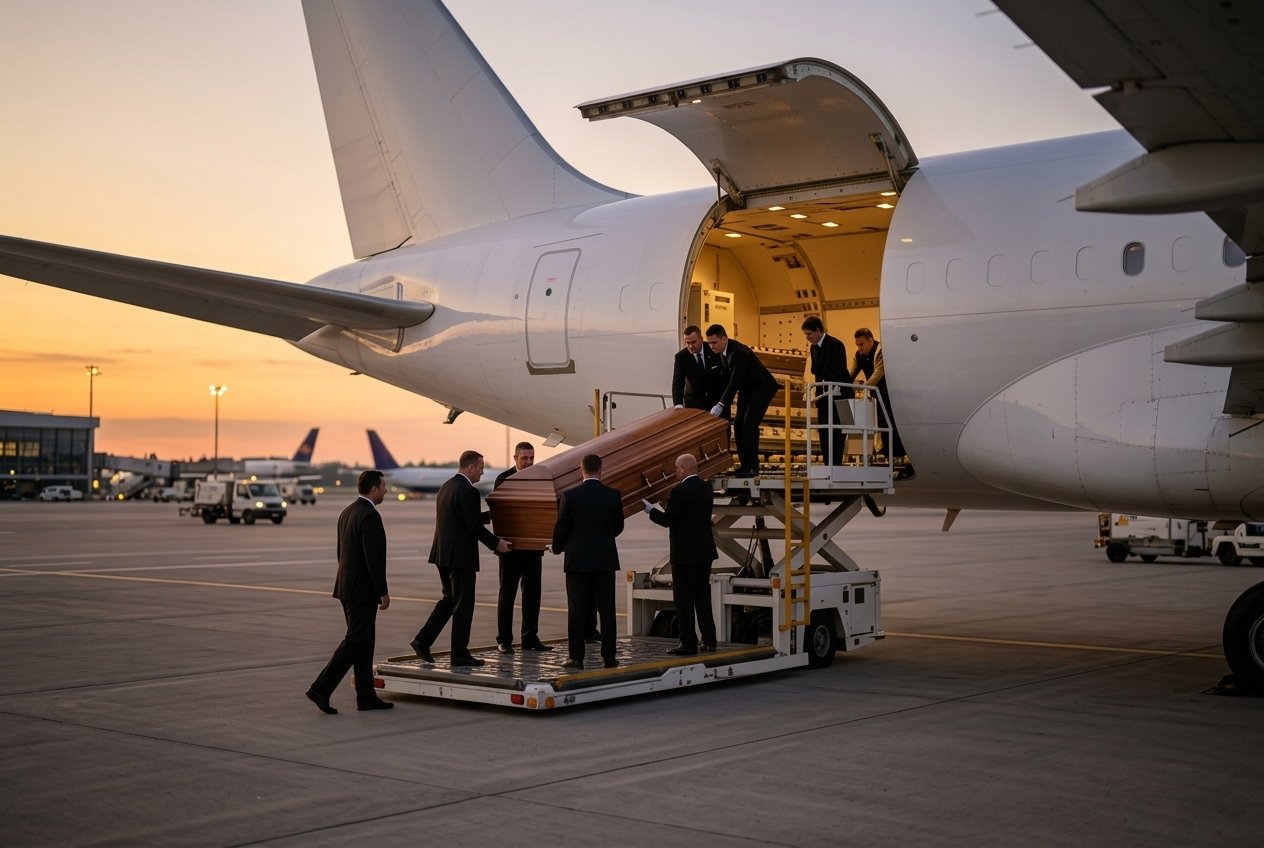
To repatriate a body from the UAE, the hospital or police register the death and the health authority issues the death certificate. The police and your embassy then issue their clearances, and the body is embalmed at a government centre and sealed in a coffin. It flies home as air cargo. For a hospital death from natural causes, this usually takes two to five days. If the person worked in the UAE, the employer must pay to prepare and transport the body if the family asks.
Most repatriation guides online still describe a process that has changed. Until late 2025, a family in Dubai would spend days going between the hospital, the police, Al Baraha, their embassy and the cargo office with folders of photocopies. Some of that still happens. A lot of it doesn’t any more.
This is the process as it works now, in October 2026, written by a team that arranges repatriations from the UAE.
First, which emirate did the death happen in?
| Emirate | Who handles the government side | What it means for the family |
| Dubai | Dubai Health Authority, through the Jabr system (since Dec 2025) | A government service officer contacts you, usually within hours. The death certificate is issued automatically, and you only need to attend in person once. |
| Abu Dhabi, Al Ain | Department of Health, through the Sanadkom initiative and TAMM | Since December 2024 the emirate covers death-related fees and repatriation costs for residents. Certificates are issued and attested digitally through TAMM. |
| Sharjah, Ajman, UAQ, RAK, Fujairah | Emirates Health Services (EHS) | The more traditional process. You apply for the certificate (AED 65 per certificate, so AED 130 if you need both the Arabic and the English version) and collect clearances step by step. |
The steps, in order
1. The death is reported
In a hospital, staff issue a death notification. Anywhere else, someone calls the police on 999. The police attend, and the body goes to a government mortuary so a doctor can establish the cause of death.
If the death was sudden, unexplained or the result of an accident, expect a forensic examination. The public prosecutor then has to release the body. This is the most common reason a repatriation takes a week instead of three days, and nobody, including us, can speed it up much.
2. The death certificate is issued
The certificate is issued in Arabic, with an English version on request. It will need attesting by the UAE Ministry of Foreign Affairs before it is valid abroad (AED 150). In Abu Dhabi, since September 2026, this can be done digitally in the same TAMM process as the certificate.
3. The embassy or consulate gets involved
Your country’s mission registers the death, cancels the passport and issues a no objection letter for the body to leave the UAE. The Indian, Pakistani, Philippine and Bangladeshi missions all handle large numbers of these cases and generally move quickly. Western embassies tend to need more forms, such as the British D1 passport cancellation form and a next of kin authorisation.
4. Police clearances
The police issue the clearances that let the mortuary release the body, let it be embalmed, and let it leave through the airport. In Dubai, Jabr now routes most of this between departments without the family going from office to office.
5. Embalming and the coffin
Every body leaving the UAE by air is embalmed. In Dubai this is done at the government embalming centre in Muhaisnah, which most people still call Sonapur. A family member, or someone the family authorises, identifies the body before it is sealed.
International airline rules, set out in IATA’s Compassionate Transportation Manual, require the body to travel in a hermetically sealed inner lining, usually zinc, inside a wooden coffin. This is one item you can’t shop around for. The coffin has to meet the airline’s standard or it won’t be loaded.
6. The flight
The coffin flies as cargo under the code HUM (human remains). Nobody has to travel with it. A funeral director at the destination has to confirm in writing that they will receive it, and some countries need their own import clearance before the flight. India, for example, now runs this through an online system called eCARe. We cover this part in detail in our guide to repatriation flights.
How long does it take?
Situation | Typical time to flight |
Hospital death, natural causes, Dubai or Abu Dhabi | 2 to 4 days |
Hospital death, northern emirates | 3 to 5 days |
Death at home or in public, no investigation needed | 4 to 7 days |
Accident or unexplained death needing a prosecutor’s release | 1 to 3 weeks |
Weekends, public holidays and limited cargo space on some routes can each add a day.
What it costs, and who should be paying ?
Here are the official Dubai Health fees for embalming and repatriation:
Item | Fee (AED) |
Embalming | 1,020 |
Ambulance | 220 |
Company handling the deceased | 1,840 |
Typing | 52.50 |
Total government package | 3,132.50 |
These are the fees listed on Dubai Health’s website at the time of writing. Dubai Health sets them and can change them, so we confirm the current figures for your case.
On top of that come the coffin, the air cargo (charged by weight and distance), the death certificate copies, attestation, and the cost of the funeral company coordinating everything. A short route like Dubai to Kerala costs far less than Dubai to London or Manila.
Before you pay anything yourself, check these three things:
- The employer. Under Article 15(3) of the UAE Labour Law (Federal Decree-Law No. 33 of 2021), the employer must pay to prepare and transport a worker’s body home if the family asks. Many families don’t know this, and some employers count on that.
- Travel, life and some health policies cover repatriation. Call the insurer before you sign anything with anyone.
- Abu Dhabi residents. Under Sanadkom, the emirate now covers death-related fees and repatriation.
If none of these apply, some embassies can help. The Indian Consulate in Dubai, for example, works with Indian community associations that help with repatriation. If the family qualifies for financial help from the Indian Community Welfare Fund (ICWF), the association charges no service fee. Otherwise, it may charge a nominal amount. We’d rather tell you that up front. If we’re the right choice for your family, it will be because the service is worth it.
Five things that cause delays
- Name mismatches. The name on the passport, visa, Emirates ID and hospital record has to match exactly, including spelling and the order of names.
- The wrong next of kin. The embassy will only take instructions from the legal next of kin, or from someone holding their written authorisation.
- An unattested certificate. Without the Foreign Affairs stamp, embassies and receiving countries will reject it.
- No receiver at the other end. The airline won’t load the coffin until a funeral director at the destination has confirmed.
- Destination paperwork. Some countries need an import permit or a health clearance before the flight. Check this on day one, not day four.
Frequently asked questions
Does a family member need to be in the UAE?
No. Families abroad can authorise someone here through the embassy, and many of our cases are handled entirely remotely over WhatsApp.
Can we see our loved one before the flight?
Usually, yes. A short viewing can often be arranged at the mortuary or embalming centre before the coffin is sealed. Ask early, because once the coffin is sealed for the flight it can't be reopened in the UAE.
Is cremation here and sending the ashes cheaper?
Usually much cheaper, and much simpler to move. For non-Muslim families who are open to it, it's worth considering. See our guide to cremation in Dubai.
Tell Us What Has Happened. We Will Guide You.
During a difficult moment, your family should not have to learn unfamiliar procedures while trying to grieve.
Global Nest Worldwide provides one point of coordination for funeral, burial, cremation and repatriation arrangements in Dubai and across the UAE.


1 Comment