What Should You Know Before Visiting Al Qusais Cemetery?
Al Qusais Cemetery is one of Dubai’s main Muslim cemeteries, run by Dubai Municipality, with the Islamic Affairs and Charitable Activities Department (IACAD) overseeing religious matters. Despite the name, it sits in Muhaisnah 2, near Al Qusais. It has the Martyrs Mosque for the funeral prayer and separate washing areas for men and women. A burial there follows Dubai’s Jabr process: the death certificate is issued automatically, then the Municipality burial permit is arranged.
Most people who search for Al Qusais Cemetery are about to go there: for a funeral this afternoon, or to visit a grave. So we start with the practical part, then explain how a burial there is arranged if you are the family making the arrangements.
Where is Al Qusais Cemetery?
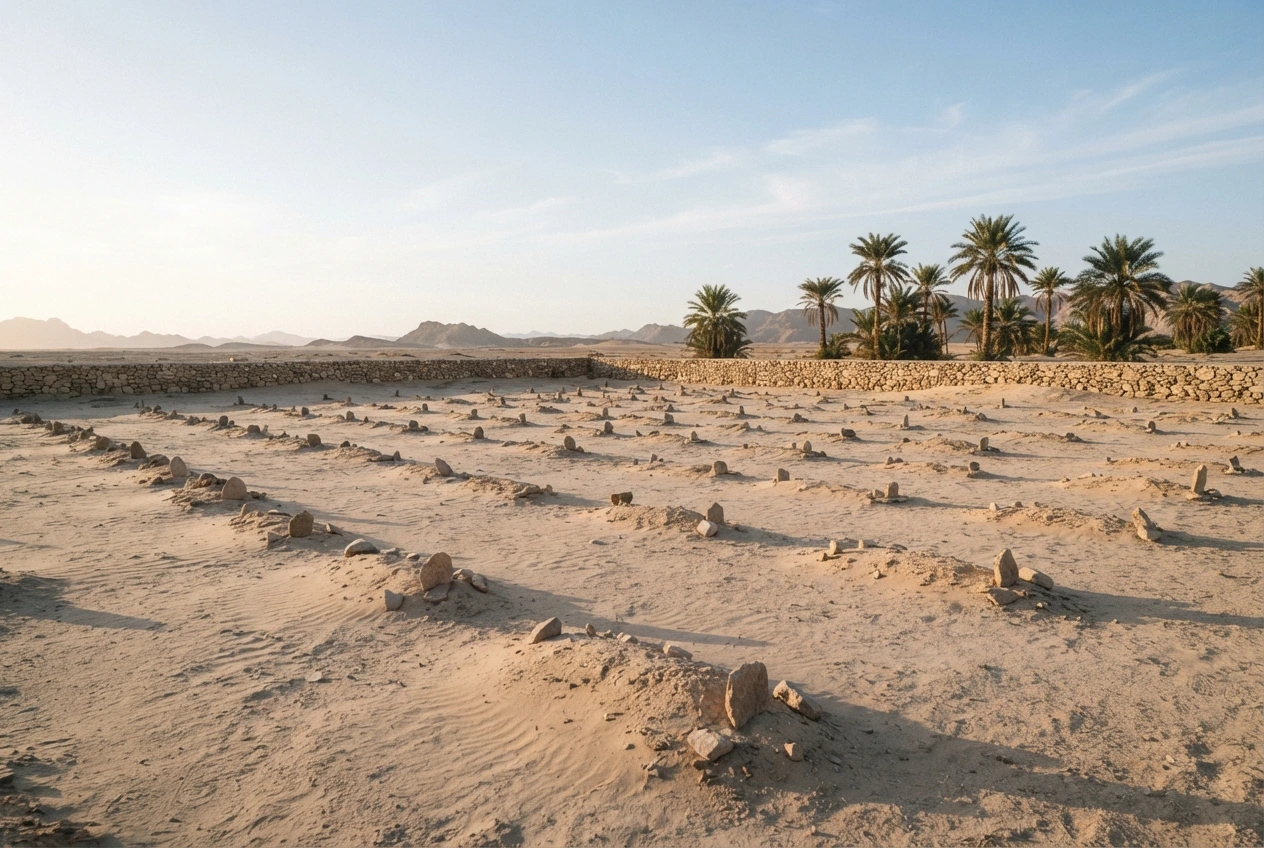
The cemetery is in Muhaisnah 2 (Muhaisanah Second), on the edge of Al Qusais in eastern Dubai, close to Emirates Road. Search “Al Qusais Cemetery” in any map app and it comes up by name. Funeral crowds can be large, so allow time to park.
On public transport, buses run near the cemetery, but the nearest metro station is several kilometres away. Check the RTA app or S’hail for the current route from where you are rather than relying on an old list.
The Al Qusais Cemetery mosque and washing areas
The cemetery has its own mosque, the Martyrs Mosque, where the janazah (funeral) prayer is usually held before burial. IACAD has also described separate men’s and women’s washing areas at the cemetery, used for ghusl, the ritual washing and shrouding of the deceased.
Since 2025, Dubai Municipality and IACAD have shared responsibility for cemeteries. The Municipality runs the facilities. IACAD oversees the religious side, including appointing and licensing the staff who wash, shroud and bury, and permitting volunteers.
What you may be looking for | At Al Qusais |
Funeral prayer | Martyrs Mosque, inside the cemetery |
Washing and shrouding | Separate men’s and women’s washing areas, staff overseen by IACAD |
Who runs it | Dubai Municipality, with IACAD on religious matters |
Who is buried here | Muslims |
Visiting a grave
UAE federal rules on cemeteries say visits should be in daytime, and that each cemetery displays its visiting etiquette at the entrance. Read that sign when you arrive. In general:
- dress modestly and keep your voice low
- don’t walk or sit on graves
- follow the staff’s directions, especially during a burial
- ask staff to help you find a grave if you don’t know the plot
We have not listed exact gate times or a phone number because we could not confirm them on an official Dubai Municipality page. If you are travelling a long way, check with Dubai Municipality first.
For women who want to attend a burial or visit, practice varies between families and scholars. The burial team at the cemetery can tell you what is arranged on the day.
How a Muslim burial at Al Qusais Cemetery is arranged
In Islam, burial happens as soon as possible, often the same day. Dubai’s system is set up for that.
- The death is recorded. A hospital doctor, or the police and forensic doctors for a death outside hospital, complete the death report.
- Jabr starts. Since December 2025, DHA’s Jabr framework assigns a government service officer to the family. They contact you, confirm whether you want burial or repatriation, and the death certificate is issued automatically. DHA says most procedures are done online, with one in-person visit for burial or repatriation matters.
- Police clearance, where needed. If the death was outside hospital or unexpected, the police must issue a no objection letter before the body is released.
- The burial permit. Dubai Municipality issues the permit and allocates the cemetery and plot. Families do not choose a specific plot.
- Washing and shrouding. Your loved one is taken to the cemetery’s washing area, where trained washers carry out ghusl. Close family members of the same gender sometimes join, if they wish and if staff agree.
- Janazah and burial. The prayer is held at the mosque, then the burial follows.
- Emirates ID or passport of the deceased
- Emirates ID of the family member dealing with Jabr
- Police clearance, if the death was outside hospital
- Contact details of the next of kin abroad, for the embassy
Before you go to the funeral
If you are a relative or friend rather than the person arranging things, a few small points make the day easier:
- Ask the family for the prayer time. It is usually set around one of the daily prayers, and timings shift if paperwork runs late.
- Arrive early. Men usually gather for the janazah at the mosque, then walk with the body to the grave.
- Bring water in summer. Much of the cemetery is open ground with little shade.
- Condolences are often received afterwards at the family home or a majlis, over the following days, rather than at the graveside.
For residents of Dubai, burial in Dubai is straightforward. Dubai’s rules (Administrative Resolution 263 of 2024) only allow burial of non-residents in specific cases, for example when the person had started a residence application, or when repatriation is not possible for health or other serious reasons. If your loved one was visiting, speak to us early.
What about non-Muslim burial in Dubai?
Al Qusais is for Muslims. Non-Muslims are buried in separate cemeteries. Families most often use the Christian cemetery in the Jebel Ali area, and older guidance also mentions a non-Muslim burial ground in Al Quoz. The same residence rule applies: in practice, burial needs the deceased to have held a residence visa.
Two changes help non-Muslim families. Since February 2026, Dubai Municipality no longer charges for the burial or cremation permit or for moving the body (Executive Council Resolution 5 of 2026). Cremation at Jebel Ali is open to non-Muslims, including visitors. Our overview of funeral options in Dubai compares burial, cremation and repatriation.
How we can help
Jabr takes much of the paperwork off families. What it doesn’t do is stand with you: waiting at the mortuary, making sure relatives abroad know the time of the prayer, or arranging transport to the cemetery. Through our burial assistance in the UAE, one case coordinator does that for you. If the family later decides on repatriation instead, we can switch plans quickly.
If this has only just happened, our guide to the first 48 hours after a death in Dubai is a good place to start.
Frequently asked questions
Is Al Qusais Cemetery only for Muslims?
Yes. Non-Muslims are buried in separate cemeteries in Dubai.
Can the burial happen on the same day?
Often, yes, if death happens early enough and no police investigation is needed. Jabr and the Municipality are set up to move quickly for Muslim burials.
Where is the funeral prayer held?
At the Martyrs Mosque inside the cemetery, before the burial.
What time is Al Qusais Cemetery open?
Visits are meant to be during daytime. We could not confirm exact gate times officially, so check with Dubai Municipality before a long journey.
Can a visitor to Dubai be buried at Al Qusais?
Only in limited cases set out in Dubai's rules. Talk to us or your Jabr officer first.
Tell Us What Has Happened. We Will Guide You.
During a difficult moment, your family should not have to learn unfamiliar procedures while trying to grieve.
Global Nest Worldwide provides one point of coordination for funeral, burial, cremation and repatriation arrangements in Dubai and across the UAE.